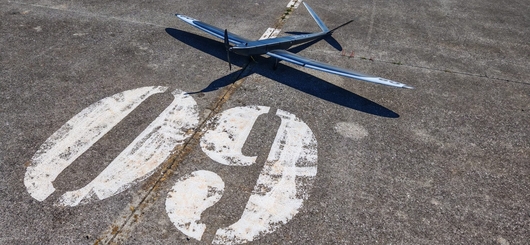

Born in 2003, grown across Europe
The Air Cargo Challenge started in Portugal in 2003, inspired by the North American Design/Build/Fly contest, and from 2007 it became a fully European competition. It is held every two years, and each edition is organised by a different university aeromodelling club, which writes the rulebook and hosts the event.
Teams are made up of engineering and science students and postgraduates. The format never changes: a rulebook published a year ahead, months of design and construction, and three days of competition in which the aircraft has to actually do what the calculations promised.
Flying is not enough: you have to carry
The score does not reward the most elegant flight, but the best compromise. Each mission counts for how much cargo you managed to load, how much distance you covered in the time allowed, and how little ground you needed to get airborne.
On top of that comes everything done before reaching the airfield: a preliminary report, a technical report, construction drawings, a poster and a presentation in front of the jury. A team that flies well but documents badly does not get to the end.
The fixed constraints
Prescribed motor — the same for everyone, so the design makes the difference, not the budget.
On-board energy only — no take-off assistance: catapults, bungees and hand launches are forbidden.
Fixed wing — no helicopters, autogyros, airships or balloons.
Line-of-sight pilot — the flight is flown looking at the aircraft, not at a screen.
Everything in one box — aircraft and tools must fit in a single transportable container.
Cans, quickly
The 2026 cargo is 0.33-litre cans: the more you carry and the faster you fly, the more you score. Every mission is identical — take-off, sixty seconds of climb, one hundred and twenty seconds in which distance is accumulated, and a clean landing.
Extra points go to whoever leaves the ground in the shortest run and loads and unloads fastest. No set course and no judge with a stopwatch: everything is measured by an electronic box on board, so the result depends on the aircraft and not on the pilot's reflexes.