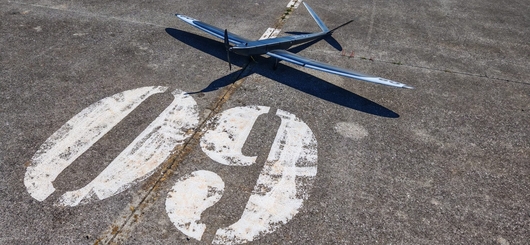

Born in 2003, expanding across Europe
The Air Cargo Challenge was born in Portugal in 2003, inspired by the North American Design/Build/Fly, and became a fully-fledged international competition in 2007. It takes place every two years, with each edition is hosted by a different university aeromodelling club, that writes the rules and organizes the event.
Teams of engineering and science students and PhD candidates participate. The formula is always the same: rules published a year in advance, months of design and construction, and a three-day event where the aircraft must prove what the calculations promised.
Flying isn't enough: you have to deliver
The score doesn't reward the most elegant flight, but the best engineering compromise. Each mission's score is based on the payload carried, the distance coverd within the time limit, and the shortness of the takeoff distance.
To this, you must add everything done before reaching the airfield: a preliminary report, a thecnical report, construction drawings, a poster and a presentation to the jury. Because a team that flies well but documents poorly won't reach the top.
The Fixed Constraints
Imposed motor — The same for everyone, so the design makes the difference, not the budget.
Onboard energy only — No take-off assistance: catapults, rubber bands, and hand launches are strictly forbidden.
Fixed-wing — No helicopters, autogyros, blimps or balloons.
Visual Line of sight — The flight is conducted by watching the aircraft directly, not through a screen.
Everything in a box — The aircraft and tools must fit in a single transportable container.
The 2026 Challenge: Cans and Speed
The payload for 2026 consists of 0.33-liter cans: the more you carry and the faster you fly, the more you score. Every mission is identical — takeoff, sixty seconds of climb, one hundred and twenty seconds to accumulate distance, and a clean landing.
Extra points are awarded for the shortest takeoff distance and the fastest loading and unloading times. There is no set path and no judge with a stopwatch: everything is measured by an electronic box on board, so the result depends entirely on the aircraft and not on the pilot's reflexes.